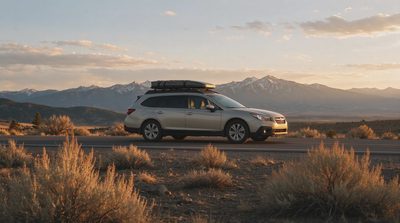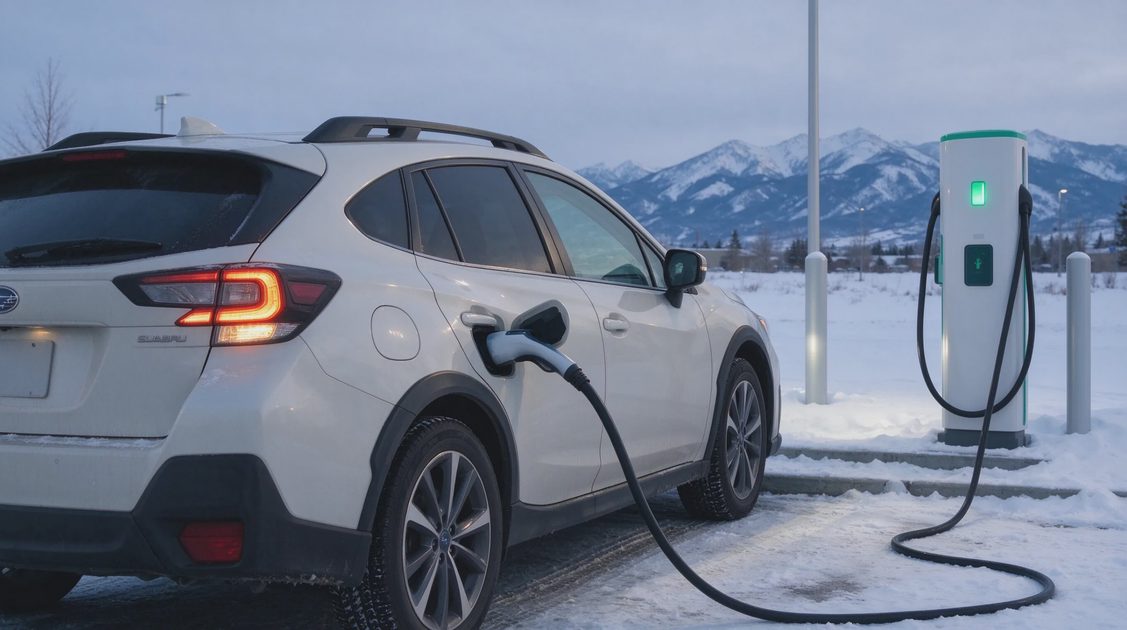
Subaru’s electrified lineup has grown quickly from a single battery-electric model to a mix of full hybrids and three distinct EVs. The Crosstrek Hybrid and Forester Hybrid keep the familiar Boxer character with electric assistance, while the Solterra, Trailseeker, and Uncharted share a common battery platform developed with Toyota yet differ in power, range, and intended use. For owners weighing a switch from pure gasoline or deciding among the new options, the practical differences matter more than the marketing labels. Here is how the current pieces fit together for everyday U.S. driving.
The Hybrid Pair: Crosstrek and Forester
The Crosstrek Hybrid and Forester Hybrid use a 2.5-liter Boxer engine paired with an electric motor for combined output in the low-to-mid 190-horsepower range. Fuel-economy gains are meaningful compared with their gas-only counterparts, typically landing in the mid-30s mpg combined under mixed driving. Both retain Symmetrical All-Wheel Drive and the expected Subaru ground clearance, so winter traction and light trail use remain familiar.
These hybrids suit drivers who want lower fuel costs and reduced emissions without changing charging habits or range anxiety. They refuel at any gas station and require no special infrastructure. The trade-off is that pure-electric range is limited to short low-speed stretches; most driving still relies on the gasoline engine. For many households this is the lowest-friction entry into electrification.
Owners who already like the Crosstrek or Forester packaging will find the hybrid versions feel largely the same in daily use, with the added benefit of quieter operation at low speeds and better numbers at the pump.
Solterra: The Everyday Battery-Electric SUV
The Solterra remains Subaru’s most approachable pure EV. It offers standard all-wheel drive, roughly 8.3 inches of ground clearance, and EPA range figures that reach the high 200s of miles depending on wheels and trim. Dual-motor power climbs as high as the mid-300-horsepower range on higher trims. DC fast charging from 10 to 80 percent is typically in the high-20-minute range under favorable conditions.
The Solterra works best as a primary or secondary vehicle for drivers with reliable home or workplace charging and daily needs that fit inside a 200-plus-mile window. It handles snow and light dirt roads with the expected Subaru confidence, though it is not positioned as a hard-core off-roader. Cargo space and passenger room are competitive with other compact-to-midsize electric SUVs.
For owners coming from an Outback or Forester, the seating position and outward visibility feel familiar. The main adjustment is planning around charging rather than fuel stops on longer trips.
Trailseeker: Power and Light Adventure Focus
The Trailseeker sits at the higher-performance end of Subaru’s current EV trio. Dual-motor output reaches approximately 375 horsepower, making it the quickest vehicle in the current U.S. Subaru lineup. Ground clearance is about 8.5 inches, and the vehicle is rated to tow up to 3,500 pounds. Range sits in the low-to-mid 280-mile area depending on configuration.
This model targets drivers who want stronger acceleration and the ability to pull a small trailer or carry more demanding weekend loads while staying electric. The trade-off is slightly lower maximum range compared with the Uncharted and a higher starting price. It remains a crossover rather than a body-on-frame truck, so serious off-road or heavy towing still belongs to other vehicles.
Owners who value the extra power for highway merging or mountain grades and who have consistent charging access will find the Trailseeker the most engaging of the three battery-electric options.
Uncharted: Range and Efficiency Emphasis
The Uncharted prioritizes range and a more car-like driving character. EPA estimates reach approximately 308 miles on the most efficient configurations. Power is lower on the front-wheel-drive version and rises with the available all-wheel-drive dual-motor setup. Ground clearance is about 8.2 inches. It is the least expensive of the three EVs in base form.
This model suits drivers whose priority is maximizing distance between charges and who spend most of their time on pavement or light gravel. The available front-wheel-drive version further improves efficiency for mild climates where all-wheel drive is less critical. It is the closest thing in the current lineup to an electric daily driver that still carries a Subaru badge and the associated safety systems.
Test-driving both the Uncharted and Solterra back-to-back quickly clarifies which balance of range, power, and ground clearance feels more useful for a given household.
Shared Technology and Real-World Charging
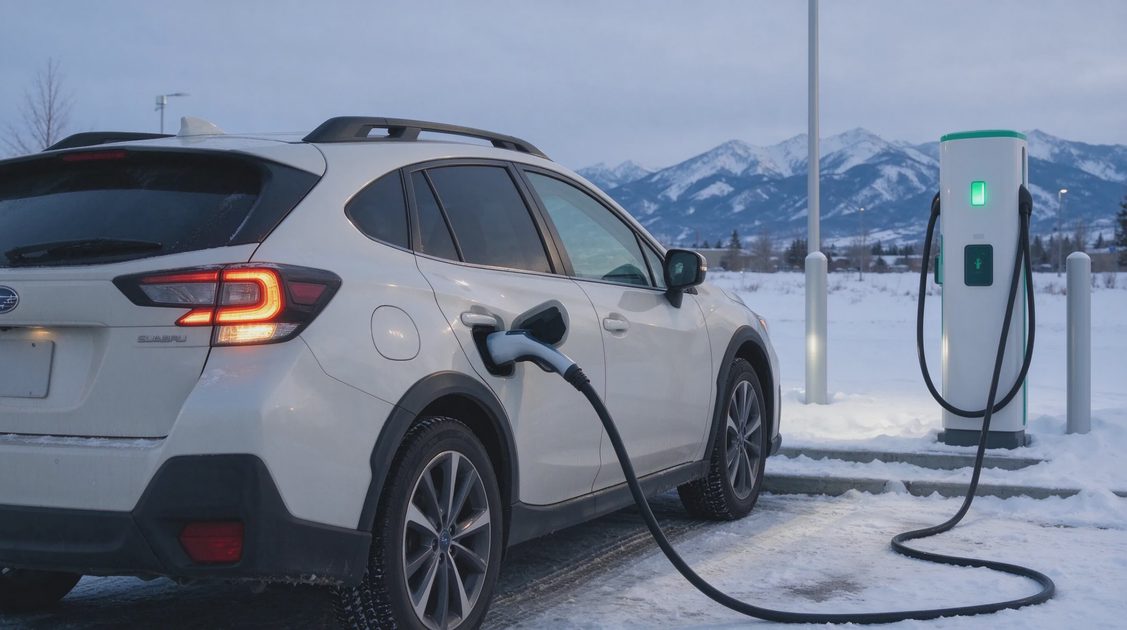
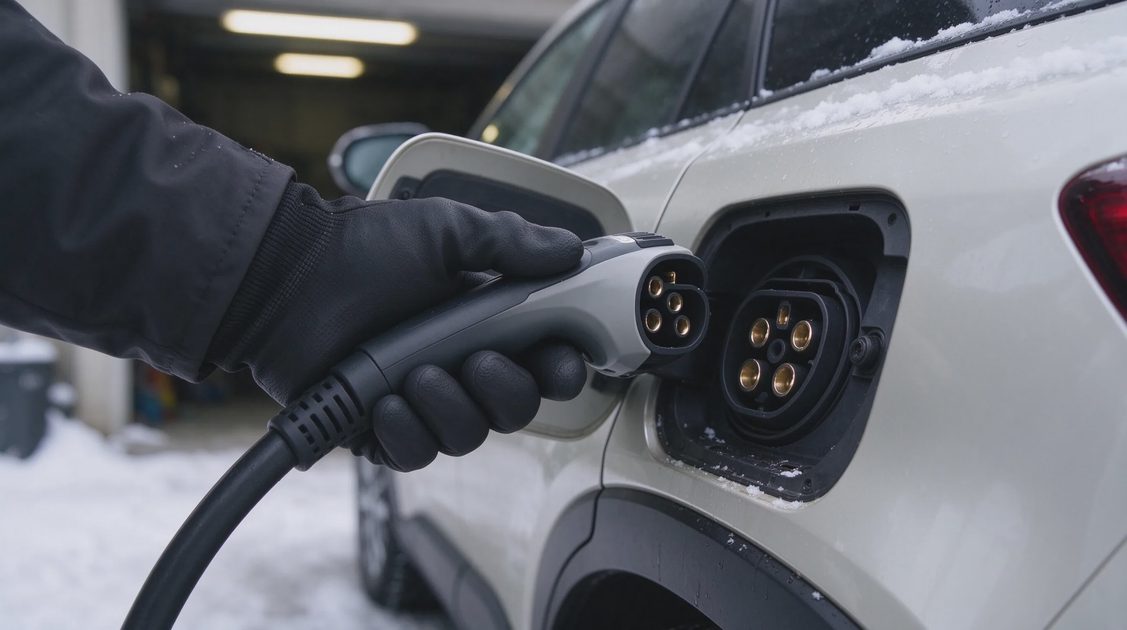
All three battery-electric models use a 74.7 kWh battery pack and support NACS DC fast charging at rates around 150 kW. Home Level 2 charging overnight covers the vast majority of daily needs. Public fast-charging speed and reliability vary by network and location; planning tools and the vehicle’s own navigation help, but cold weather and high speeds still reduce real-world range as they do with every current EV.
Subaru’s partnership with Toyota on the platform means parts commonality and shared engineering, yet the vehicles receive Subaru-specific tuning for all-wheel-drive behavior, EyeSight calibration, and exterior design. Owners should still evaluate each model on its own merits rather than assuming identical driving character.
Cold-climate owners need to budget for reduced winter range and the benefit of preconditioning the battery while still plugged in. That practice is common across modern EVs and is not unique to Subaru.
Matching the Vehicle to Actual Use
Drivers who want to keep gasoline infrastructure and minimize change should look first at the Crosstrek or Forester Hybrid. Those ready for full electrification and who have home charging should compare the Solterra for balanced daily use, the Trailseeker for higher power and light towing, and the Uncharted for maximum range and efficiency. Ground clearance across the EV trio is adequate for snow and graded dirt but does not match the higher Wilderness gas models.
A short table helps clarify the core differences:
Model | Type | Approx. Max Power | Approx. Max Range | Ground Clearance | Best Fit |
|---|---|---|---|---|---|
Crosstrek Hybrid | Hybrid | ~194 hp | N/A (gas + electric assist) | Standard Crosstrek | Low-friction efficiency |
Forester Hybrid | Hybrid | ~194 hp | N/A (gas + electric assist) | Standard Forester | Family hybrid utility |
Solterra | BEV | Up to 338 hp | Up to ~288 mi | 8.3 in | Everyday AWD EV |
Trailseeker | BEV | 375 hp | ~280+ mi | 8.5 in | Power + light adventure |
Uncharted | BEV | Up to 338 hp | Up to ~308 mi | 8.2 in | Range and efficiency |
Numbers are approximate and vary by trim, wheels, and testing conditions; always confirm the specific vehicle’s window sticker and EPA label.
Ownership Realities Beyond the Spec Sheet
Battery degradation, residual values, and long-term service costs are still maturing for Subaru’s EV lineup. The hybrids carry fewer unknowns because their core powertrains remain closely related to existing gasoline models. Insurance, tire costs, and the availability of independent service for high-voltage systems should factor into any purchase decision.
Test drives remain essential. Seat comfort, cargo shape, noise levels, and the feel of regenerative braking differ enough among the models that specifications alone cannot decide the fit. Owners who charge at home most nights and whose typical trips fall well inside the EPA range will have the smoothest experience with any of the battery-electric options.
Subaru’s expansion gives buyers more choices than existed even two years ago. The right vehicle is the one whose daily pattern matches the owner’s actual roads, climate, and charging access rather than the one with the highest number on any single chart.
Before you spend:
Check the symptom. Count the cost. Then decide.