Roof racks look simple until you start adding real weight. A pair of kayaks, a cargo box full of camping gear, or a rooftop tent quickly forces the question of how much the roof can actually carry. Subaru publishes separate dynamic and static numbers, and the crossbars themselves often carry a lower rating than the rails. Understanding those limits before the first loaded trip keeps the roof from becoming the weak point on an otherwise capable vehicle. Here is how the numbers work on current Outback, Forester, and Crosstrek models.
Dynamic Versus Static: The Two Numbers That Matter Most
Dynamic load is the maximum weight the roof can safely carry while the vehicle is moving. It includes the crossbars, the carrier, and whatever is strapped on top. Static load is the maximum weight the roof can support when the vehicle is parked. Static ratings are substantially higher and are the figure that matters for rooftop tents once you are camped and people are climbing in and out.
Wind, braking, and cornering multiply the effective force on a loaded roof, which is why the dynamic number is always the more restrictive one for highway travel. A tent that is fine while parked can exceed the dynamic limit the moment you drive. Ignoring the distinction is the most common way owners overload a Subaru roof without realizing it.
Always treat the lowest published number in the system—rails, crossbars, or accessory—as the working limit. The vehicle’s rating does not increase just because an aftermarket bar claims a higher capacity.
Current Ratings Across Popular Models
On recent Outbacks the dynamic rating sits around 150–220 lbs depending on year and trim, with the 2026 redesign raising the figure on many versions. Static ratings for rooftop-tent use reach 700–800 lbs on Wilderness and newer models. Foresters commonly list 176 lbs dynamic and 700 lbs static. Crosstreks with raised rails are typically rated 150–165 lbs dynamic and 700 lbs static.
Wilderness trims often carry higher numbers because of stronger rails and different crossbar designs. Base models without factory rails may require aftermarket feet and bars whose own ratings become the limiting factor. The owner’s manual for the exact vehicle remains the final authority; online summaries are useful starting points but not substitutes for the printed page.
These figures already include the weight of the crossbars themselves. Any cargo, kayak, or tent must fit inside the remaining capacity after the bars are accounted for.
Kayaks, Cargo Boxes, and Everyday Gear
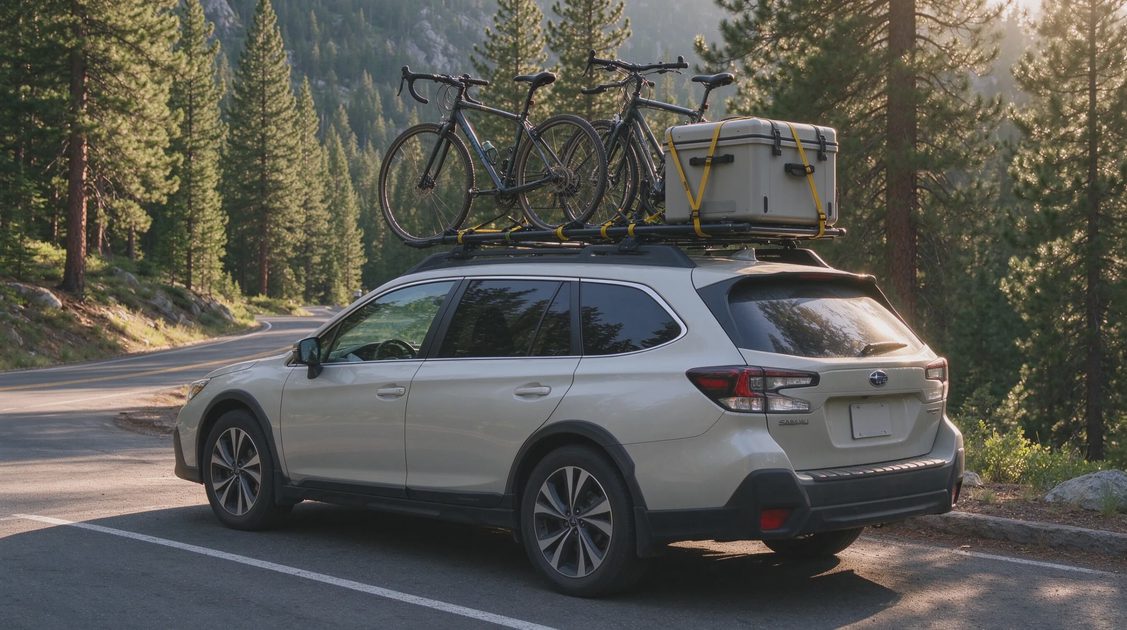
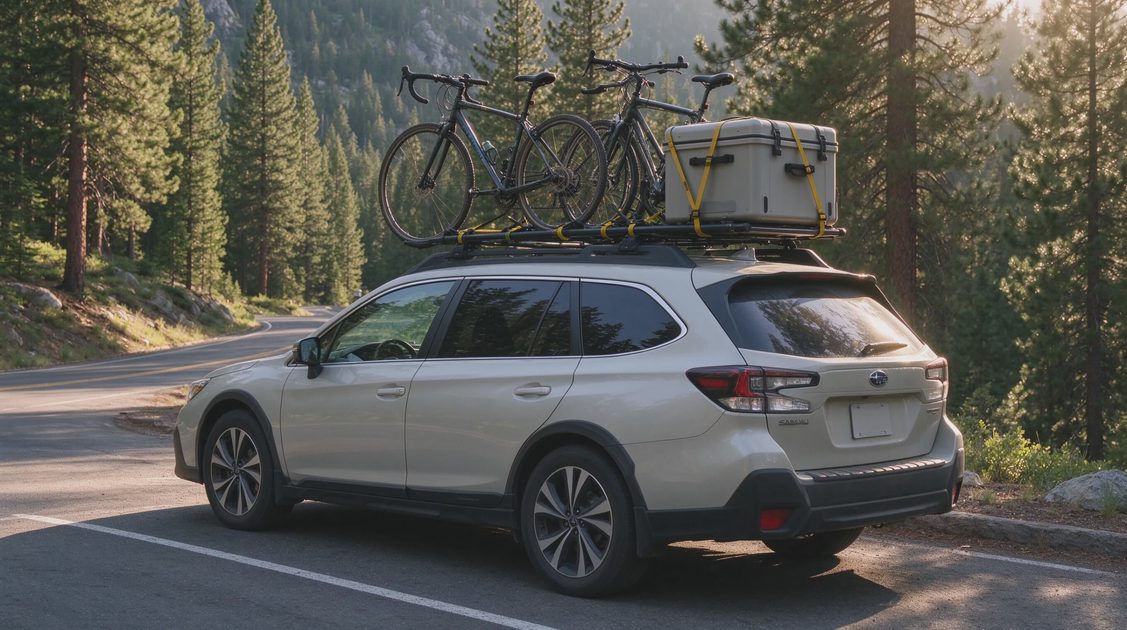
Two recreational kayaks plus cradles and straps can easily reach 80–120 lbs. A medium cargo box with overnight gear can add another 40–70 lbs. Add the crossbars and the total approaches or exceeds the dynamic limit on many non-Wilderness models. The practical solution is to weigh the actual gear or use manufacturer published weights and subtract the bar weight before loading.
Distribute the load as low and centered as possible. Overhanging kayaks create extra wind leverage; strapping them tightly and using bow and stern lines reduces movement. A cargo box should be mounted so its weight sits between the bars rather than cantilevered off one end. These habits keep the real-world load closer to the rating the engineers tested.
If the math is tight, consider carrying one kayak on the roof and the second inside or on a hitch tray. The roof is not the only place to put weight.
Rooftop Tents and the Static-Load Reality
Most soft-shell or hard-shell rooftop tents weigh 100–150 lbs before occupants and bedding. That weight must stay under the dynamic limit while driving and under the much higher static limit once parked. Many standard Outback and Forester roofs leave little margin once the tent and bars are combined, which is why Wilderness models with higher ratings are popular among tent users.
When the vehicle is parked the static rating governs. Two adults plus sleeping pads and a small amount of gear can still fit inside a 700–800 lb static limit, but the tent manufacturer’s own occupancy rating and the vehicle’s static number must both be respected. Climbing in and out creates dynamic forces even while the car is stationary; treating the static number as an absolute ceiling is the safer approach.
Confirm that the tent’s mounting system is compatible with the specific rail or bar type on the vehicle. A mismatch can concentrate load in ways the roof was never designed to handle.
Crossbars, Aftermarket Racks, and the Weakest Link
Factory crossbars on many Subarus are rated lower than the rails themselves. Aftermarket bars often advertise higher capacities, but the vehicle roof remains the limiting structure. Installing heavier bars does not raise the dynamic rating of the body shell. The correct approach is to choose bars that fit the rail type and then stay inside the vehicle’s published dynamic number.
Raised rails and flush rails require different feet and clamps. Using the wrong hardware can damage the rails or allow the bars to shift under load. Torque the clamps to the bar manufacturer’s specification and recheck them after the first loaded drive. A bar that moves a fraction of an inch at highway speed will move more the next time.
If you frequently carry heavy or bulky loads, a hitch-mounted tray or a small trailer may be a more honest solution than trying to stay inside a tight roof rating.
Practical Loading Habits That Keep You Inside the Limits
Weigh or look up the actual weight of every item that will sit on the roof. Subtract the weight of the bars and any permanent mounts. The remainder is the cargo budget. Load the heaviest items as low and centered as possible. Use quality straps rated for the load and check them after the first twenty miles.
Reduce speed in crosswinds and on rough roads; both increase the effective force on the roof. Remove the load when it is not needed rather than leaving a cargo box or tent on the roof for daily commuting. The aerodynamic penalty and the constant stress on the rails add up over time.
These habits turn the published numbers from abstract limits into a workable system for real trips.
When the Roof Is Simply the Wrong Place for the Load
Some combinations will never fit comfortably inside the dynamic rating of a given model. A heavy hard-shell tent plus two kayaks, or a fully loaded cargo box plus a pair of bikes, can push even a Wilderness roof past its comfortable margin. In those cases the honest answer is to move part of the load to a hitch rack, a trailer, or the cargo area inside the vehicle.
The roof is a convenient place for bulky, relatively light items. It is not a substitute for proper payload planning. Knowing the numbers before you buy the gear prevents the expensive discovery that the tent or kayaks you chose simply do not fit the vehicle you already own.
Before you spend:
Check the symptom. Count the cost. Then decide.